 Via EatMeDaily
Tuesday, September 28, 2010

Tuesday, September 14, 2010
Bouilly for bouillabaisse
 With humble origins, bouillabaisse has become one of those sophisticated dishes everyone thinks is hard to make. But before we get into recipes and techniques, so that you can brag about having it your repertoire, a bit of charming history ....
[You foodies who know this, skip ahead.]
Bouillabaisse originated in Marseilles, on France's central west coast. Back from a hard and long morning's work at sea, their boats and docks groaning with a great catch, the fisherman were ready for a meal. One builds a great open fire for a giant pot. Another prepares the aromatics [onions, carrots, celery, bay leaves, herbs]. Someone peels the potatoes. A lot of them. Each pitches in fish from their haul and a giant fish stew is wrought.
Today, we include shellfish, because it's a no brainer. They work beautifully. But originally, bouilly was served in two stages: first the flavourful refreshing broth, and second, the potatoes, fish and vegetables, with plenty of bread. This guys needed a lot of carbs.
Below is a fabulous video of a small country restaurant in Nice, where the bouillabaisse is made "old school." The special guests are chefs and their mates, lined up at long tables al fresco.
The video doesn't have any subtitles [apart from some brief commentary in English], but it's worth noting that the opening tune is a tribute song about the fisherman of Marseilles. [The next song seems to be about cows, probably about how inferior they are to fish. If anyone can translate, let us know.]
This next video is good and bad -- and still worth sharing.
It's good because it does a good job of breaking down technique, except for the bouillant or "boiling" part of the process. The word bouillabaisse is essentially French for 'boiling low," as in temperature, and therefore slowly. A fast boil doesn't give you a chance to skim the soup properly, so all those impurities [aka skum] get sucked back into the soup and makes it cloudy and nasty. There isn't a chef or maker of good bouilly who wouldn't shudder how violently the chef lets his bouilly boil. It's just bad form [and sounds vaguely like that Aussie song about letting a billy boil]. Part
An important thing to know about boiling, generally and especially when making soup or stock: the boiling point temperature of 212F, whether it's just barely ticking over [the best way to make soups and stocks] or the rolling boil of a perfect storm [and you know what that gets you] is the same. Get your soup just barely ticking over, meaning little balls of air are rising delicately to the top.
How To Make Bouillabaisse [sort of]
Here's the New York Times on bouilly, including a century-old recipe, which they clearly still endorse.
Credit for this post goes to our wine guy Glenn, who loves any chance to pair red wine and fish.
What are we drinking with this, Glenn?
From Italy, to go with bouilly's characteristic saffron scenting, I recommend the 2007 Rosso di Montefalco by Caprai, in Umbria. It's wonderfully rich, with gorgeous floral aromatics that hint at saffron, with fennel hints and plenty of red fruit. Staying in Italy, still unctuous but a little lighter and less tannic, try the 2007 Masciarelli, by Montepulciano D'Abruzzo, for its racy acidity and dark unwooded fruit.
Top image: Flickr member dwizzy licensed under Creative Commons) Via TheKitchn.com [also with a recipe worth checking out]
Next week, we talk rouille [pron: roo-ee].
Wednesday, September 8, 2010

Monday, August 30, 2010
Shrimp with "Crunchy Salad"

Writing about fish and seafood comes naturally to Renee Lavallee, aka Feisty Chef. She is executive chef of Five Fisherman, a famed Halifax restaurant strong on, you guessed it, fish and seafood. And that tasty looking dish pictured above is her Crunchy Salad.
We're borrowing this recipe, not only because it tastes as delicious as it looks, but because it's gluten-free. More and more, we're learning that people in our lives have to avoid gluten. This is something we're going to love eating with them. Bonus: it's dead easy.
A few words about shrimp these days, since everyone's wondering how the damage of the gulf oil catastrophe is affecting marine life. Gulf shrimp has always been hard to get here, mostly because of cost and a very short shelf life. Most people are buying frozen shrimp or previously frozen black tiger shrimp, which are great. We also sell organic farmed frozen shrimp from Ecuador, also worth trying.
Crunchy Salad
- 1 english cucumber; diced
- 1 red pepper; julienned
- 4 carrots; julienne
- 1 pkg tofu; diced and fried
- ½ bunch cilantro; roughly chopped
- ½ C. basil; roughly chopped
- 1 C. cashews or peanuts; roughly chopped (optional)
- 4 scallions; julienne
- 2 Tbsp toasted sesame seeds
- ½ pineapple; large dice
- 12 x 16/20 shrimp, sauteed (optional)
Mix all the ingredients together with vinaigrette.
Vinaigrette
- ½ C. canola or grape seed oil
- ¼ C. sesame oil
- ½ C. tamari or soy sauce
- 1 Tbsp white sugar
- ½ inch ginger; peeled and minced
- 2 cloves garlic; minced
- ¼ C. chopped cilantro
- 2 Tbsp fish sauce
- 2 Tbsp rice wine vinegar
- 2 Tbsp mirin
- salt & pepper to taste
- 2 Tbsp sambal olek (optional)
Whisk together all the ingredients and pour over the salad.
Thanks, Renee.
Glenn, what are we drinking w/this?
With all the Asian flavours and herbs, we need something aromatic and rich. I have in mind a wine that I’ll have on hand very soon, a new wave Italian white called Anima Bianco, made by the Arnaldo Caprai winery in Umbria, with an almost almond hint on the nose. It’s got a creamy rich mouth-feel that will do right by the sesame oil and herbs.
Tuesday, August 24, 2010

Tuesday, August 17, 2010
Bistro Mussels à la Français
Some innocent bags of lovely PEI mussels were just sitting there in the display case, waiting to be taken home for dinner. But to Steph, they triggered memories of cooking traditional French food at Bistro 990.
Mussels were always on the menu, as they are in most French bistros worth their salt. And they were always served with fries, which never made sense until to me until I tried them together. And fries are always served with mayo. Once you've had real fries with mayo, you won't have any more time for ketchup.
I'm bringing up these great combinations because mussels are ridiculously easy to cook, so I thought it would be fun to encourage you to make real fries from scratch.
Apart from the perceived nuisance of frying oil -- which is no big deal and it can be recycled -- you're going to want to make them again. But yes, you'll need a thermometer. This double-cooking method is what the pros use, and it's all about temperature.
Here's a great video on how good professional kitchens make brilliant fries -- crispy on the outside and creamy on the inside. And don't listen to him about the ketchup. If he knew we're having them with mussels, he would be into the mayo, too.
Some tips on the timing for preparing this meal in general, so that both key elements are hot and ready to serve at the same time:
A few words about cleaning mussels: Give them a generous rinsing with lots of cold water. Remove the "beard" with a paring knife by pulling it down to the hinge.
Another French bistro staple that will come in handy with this meal: Baguette. The mussels' liquor [cooking liquid] is so delicious, you'll want to spoon it up like soup, or sop it up with chunks of baguette.
Bistro Mussels
serves 4
4 lbs mussels
1 medium onion finely diced
1 clove garlic, smashed
2-3 Tbsp olive oil
a few flakes of crushed chiles
3 sprigs fresh thyme
1/3 cup white wine or beer
salt & pepper to taste
There are some great wines that would work well here, too. I'd encourage people to look to a Muscadet from the Loire Valley or a crisp Sancerre. I'm happy to give some specific recommendations. Just ask. As for beers, I think pilsners are best, particularly Urquel from the Czech Republic, where the first golden pilsner [aka lager] was invented in the mid-1800s. If you want a Canadian beer, try King Brewery's pilsner made just north of the city. Right now, I'm carrying a new and very interesting Italian wheat beer made in Tuscany. It's called Bruton Bianco, made in the "white" beer tradition of Belgium, where mussels, fries and mayo are also traditional and popular.
Mussels were always on the menu, as they are in most French bistros worth their salt. And they were always served with fries, which never made sense until to me until I tried them together. And fries are always served with mayo. Once you've had real fries with mayo, you won't have any more time for ketchup.
I'm bringing up these great combinations because mussels are ridiculously easy to cook, so I thought it would be fun to encourage you to make real fries from scratch.
Apart from the perceived nuisance of frying oil -- which is no big deal and it can be recycled -- you're going to want to make them again. But yes, you'll need a thermometer. This double-cooking method is what the pros use, and it's all about temperature.
Here's a great video on how good professional kitchens make brilliant fries -- crispy on the outside and creamy on the inside. And don't listen to him about the ketchup. If he knew we're having them with mussels, he would be into the mayo, too.
Some tips on the timing for preparing this meal in general, so that both key elements are hot and ready to serve at the same time:
- Blanche the fries first. They can sit in the fridge until you need to finish them in the second cooking.
- While you're cooking the onions for the mussels, prepare the oil at the right temperature for the fries.
- Ideally, you'll be tipping your mussels into the pot right before you put the fries in for their finish.
A few words about cleaning mussels: Give them a generous rinsing with lots of cold water. Remove the "beard" with a paring knife by pulling it down to the hinge.
Another French bistro staple that will come in handy with this meal: Baguette. The mussels' liquor [cooking liquid] is so delicious, you'll want to spoon it up like soup, or sop it up with chunks of baguette.
Bistro Mussels
serves 4
4 lbs mussels
1 medium onion finely diced
1 clove garlic, smashed
2-3 Tbsp olive oil
a few flakes of crushed chiles
3 sprigs fresh thyme
1/3 cup white wine or beer
salt & pepper to taste
- On medium heat, in a tall pot with a tight-fitting lid, heat the olive oil and fry the onions until soft, with the garlic and thyme.
- Deglaze with wine or beer.
- Add mussels and give them a good stir to coat them all with the onions.
- Put the lid on and forget about them for 5 to 7 minutes.
- Check to see how many have opened.
- If a third or so remain closed, give them a little more time.
- Generally 10 - 12 minutes should do it.
- Discard any mussels that haven't opened at this point.
- Serve them up in deep bowls, pouring the liquor over the mussels, and lay the table with extra bowls for the shells.
There are some great wines that would work well here, too. I'd encourage people to look to a Muscadet from the Loire Valley or a crisp Sancerre. I'm happy to give some specific recommendations. Just ask. As for beers, I think pilsners are best, particularly Urquel from the Czech Republic, where the first golden pilsner [aka lager] was invented in the mid-1800s. If you want a Canadian beer, try King Brewery's pilsner made just north of the city. Right now, I'm carrying a new and very interesting Italian wheat beer made in Tuscany. It's called Bruton Bianco, made in the "white" beer tradition of Belgium, where mussels, fries and mayo are also traditional and popular.
Wednesday, August 11, 2010
Gather 'round this roaster
Sure. We're supposed to stay out of the kitchen in this crazy heat, and that makes some people think we should be out there on the deck grilling everything, which is fine. No harm in that, but it's not the only way to go.
Look at this beauty, aptly named Summer Tray-Baked Salmon [recipe attached], the work of Jamie Oliver.

I want to be one of the lucky people invited to sit around that table.
Look at this beauty, aptly named Summer Tray-Baked Salmon [recipe attached], the work of Jamie Oliver.

I want to be one of the lucky people invited to sit around that table.
Wednesday, August 4, 2010
A king among crabs
 Japanese spider crab, caught in the Pacific, thought to be 40 years old, transported yesterday to Sea Life Holland, near The Hague. Photo: Marcel Antonisse for Agence France-Presse, Getty Images, via WSJ.
Friday, July 30, 2010
Tuesday, July 27, 2010
Clams au naturel
Nothing like an enthusiast to show you how to get the most out of something they love. Here's Paul Randazzo. Share his love. And, fuggettabuttit!
Linguini w/clams in tomato sauce
With this inspiration, we're going Italian this week.
What are we making this week, Steph? Clams with pasta is a classic for good reason. It's a fast and easy way to get the flavour of the sea together with the bright, fresh flavour of tomato. To enrich the finish, you could drizzle the dish with some extra virgin olive oil. Freshly ground black pepper also works nicely here.
To clean clams, let them soak a few hours in very cold water and then scrub them with a brush to loosen the sand that collects in the ridges. Rinse them in several changes of water, and you're good to go.
Linguini w/Clams in Tomato Sauce
serves 4
3 dozen clams, well scrubbed
2 x 20 oz canned whole tomatoes, crushed by hand
1 medium onion finely diced
2 cloves garlic, crushed
1/4 extra virgin olive oil
1/4 white wine
1 tsp cracked chilis [of more if you like more heat]
1/4 cup finely chopped parsley
s&p to taste
What are we making this week, Steph? Clams with pasta is a classic for good reason. It's a fast and easy way to get the flavour of the sea together with the bright, fresh flavour of tomato. To enrich the finish, you could drizzle the dish with some extra virgin olive oil. Freshly ground black pepper also works nicely here.
To clean clams, let them soak a few hours in very cold water and then scrub them with a brush to loosen the sand that collects in the ridges. Rinse them in several changes of water, and you're good to go.
Linguini w/Clams in Tomato Sauce
serves 4
3 dozen clams, well scrubbed
2 x 20 oz canned whole tomatoes, crushed by hand
1 medium onion finely diced
2 cloves garlic, crushed
1/4 extra virgin olive oil
1/4 white wine
1 tsp cracked chilis [of more if you like more heat]
1/4 cup finely chopped parsley
s&p to taste
- In a large heavy pot, heat the oil and cook the onions and garlic until the onion is translucent.
- Add white wine to deglaze.
- Add the tomatoes [and their juice] and the chilis.
- Simmer until the sauce has reduced to the desired thickness
- [The clams will release liquor, which will loosen the sauce a bit.]
- While the pasta has been cooking a few minutes, return the clams to the simmering sauce and stir.
- The clams will open in less than five minutes.
- Remove them as they open, and keep them warm.
- Discard any clams that don't open in 10 minutes.
- When the pasta is cooked and drained, add the clams back to the sauce and stir.
- Add the pasta, mix well, check seasoning, and add parsley and more olive oil if desired.
Saturday, July 24, 2010

Monday, July 19, 2010
Killer Fish Tacos
I recently read about SoBo, a restaurant in Tofino, on the west coast of Vancouver Island. Their Killer Fish Tacos were first sold from a purple 1971 Chevy truck, parked behind a surf shop, and outfitted with a kitchen and picnic-table seating.
Within months of opening, enRoute magazine put SoBo, short for Sophisticated Bohemian, on its top 10 new restaurants in Canada. Saveur magazine said SoBo was probably the most exciting lunch stand in North America. The restaurant is now off-wheels and settled into a modern space with slate floors, a wall of ocean-view windows and an outdoor wood-burning pizza oven.
I've got a lot of customers who love making fish tacos with tilapia, with rave reviews from the kids.
Here's a modified recipe from SoBo's chef Lisa Ahier, plus a few words from when she handed over her recipe to the Tofino Times:
The salsa should reflect the season; in the summer I use peaches and blueberries, in autumn pears and apples, in winter pineapples. I love to pair these tacos with a lovely bed of greens with just a little olive oil and lime juice. Serving them with traditional Mexican beans and rice is wonderful as well - or simply in the hand alone is refreshing.
Killer Fish Tacos
Sangria. Red and/or white. This is a basic recipe that would meet with the approval of strict sangria traditionalists and intentionally leaves ample room for improvisation and additions, so think of it as a springboard for your own creation.
For Red:
26 oz wine, try a French rhone
1 Tbsp sugar
juice of 1 large orange
juice of 1 large lemon
1 large orange sliced thinly crosswise
1 large lemon, sliced thinly crosswise
2 medium peaches, peeled, pitted and cut into chunks
[plums, berries or pitted cherries would also be good]
1 cup club soda
For White: try a Portuguese vinho verde or a light un-oaked chardonnay
Spike: 1 - 2 ounces of brandy, or more if you'd like it stronger.
Within months of opening, enRoute magazine put SoBo, short for Sophisticated Bohemian, on its top 10 new restaurants in Canada. Saveur magazine said SoBo was probably the most exciting lunch stand in North America. The restaurant is now off-wheels and settled into a modern space with slate floors, a wall of ocean-view windows and an outdoor wood-burning pizza oven.
I've got a lot of customers who love making fish tacos with tilapia, with rave reviews from the kids.
Here's a modified recipe from SoBo's chef Lisa Ahier, plus a few words from when she handed over her recipe to the Tofino Times:
The salsa should reflect the season; in the summer I use peaches and blueberries, in autumn pears and apples, in winter pineapples. I love to pair these tacos with a lovely bed of greens with just a little olive oil and lime juice. Serving them with traditional Mexican beans and rice is wonderful as well - or simply in the hand alone is refreshing.
Killer Fish Tacos
16 taco shells
2 lb tilapia, medium diced
1/2 cup chipotle chiles canned in adobo, pureed
1 cup red onion small diced
1/2 cup olive oil
1 tbsp kosher salt
Dice the red onion and puree or finely chop the chipotles.
- Pat fish dry and season with kosher salt. Heat oil in a large nonstick skillet over moderate-high heat. Add the onions and saute them for 1 minute; add the fish and fry for about 3 minutes until just cooked. Add the chipotle chiles, stir for 1 more minute and remove from heat.
- Fill taco shells halfway with fish mixture, then top with fruit salsa.
- Serve immediately.
Lisa's Fruit Salsa
1 cup kiwi fruit, small diced
1 cup pineapple, small diced
1 cup mango, small diced
1 cup papaya, small diced
2 avocados, small diced
1/2 cup cilantro, chopped
2 limes
- Prepare the fruit salsa by dicing the ingredients small enough to fit into a prepared taco shell — smaller than a fruit salad, but not so small that the fruit turns to mush. Combine the fruit, avocado and cilantro. Refrigerate until ready to use. The holding time is about 24 hours as the fruit starts to break down. Also note that if you intend to prepare the salsa in advance, don't add the avocado until immediately before serving, as avocado turns brown quickly.
Sangria. Red and/or white. This is a basic recipe that would meet with the approval of strict sangria traditionalists and intentionally leaves ample room for improvisation and additions, so think of it as a springboard for your own creation.
For Red:
26 oz wine, try a French rhone
1 Tbsp sugar
juice of 1 large orange
juice of 1 large lemon
1 large orange sliced thinly crosswise
1 large lemon, sliced thinly crosswise
2 medium peaches, peeled, pitted and cut into chunks
[plums, berries or pitted cherries would also be good]
1 cup club soda
- Combine, mix well, refrigerate overnight.
- Just before serving, add soda.
For White: try a Portuguese vinho verde or a light un-oaked chardonnay
Spike: 1 - 2 ounces of brandy, or more if you'd like it stronger.
Sunday, July 18, 2010
Big fish, small fish
Great video game. You start out small, and if you manage to avoid getting eaten by the big fish, you get big yourself. Good luck! [Addiction notice: you might get hooked.]
Monday, July 12, 2010
Rolling up to cool down
Crazy heat like we've had this week calls for salad rolls with a twist. The recipe requires next to no cooking, lots of fresh flavours and casual eating with our hands.
I recommended snapper fillets, which is the commercial name for rockfish, a beautiful, light. white fish from the west coast that flakes perfectly for a dish like this.
Rockfish Salad Rolls
w/Arugula, Avocado & Tarragon Vinaigrette
Serves 4, 3 rolls each
1 1/2 - 2 lb rockfish
1 package 12" rice paper wrappers
1 red pepper, finely julienned
1/4 medium white onion, finely julienned
2 ripe avocados
baby arugula
fresh tarragon
Vinaigrette
2 cups olive oil
1/2 white wine vinegar
2 Tbsp chopped tarragon
2 tsp dijon mustard
salt & pepper
To make the vinaigrette:
To assemble:
I'd go with prosecco. The Serenissima has hints of sweet almonds, fresh florals and apple to balance the tang of the vinaigrette.
I recommended snapper fillets, which is the commercial name for rockfish, a beautiful, light. white fish from the west coast that flakes perfectly for a dish like this.

Rockfish Salad Rolls
w/Arugula, Avocado & Tarragon Vinaigrette
Serves 4, 3 rolls each
1 1/2 - 2 lb rockfish
1 package 12" rice paper wrappers
1 red pepper, finely julienned
1/4 medium white onion, finely julienned
2 ripe avocados
baby arugula
fresh tarragon
Vinaigrette
2 cups olive oil
1/2 white wine vinegar
2 Tbsp chopped tarragon
2 tsp dijon mustard
salt & pepper
To make the vinaigrette:
- Put dijon into a large jar with a tight-fitting lid.
- Dilute with vinegar.
- Add olive oil and shake well.
- Add tarragon, and season with salt and pepper.
- Lay fish on a baking sheet.
- Lightly rub with some olive oil.
- Season with salt and pepper.
- Sprinkle with some chopped tarragon.
- Roast in a preheated 400F oven for about 7 minutes.
- When cooled, flake into bite-sized pieces.
- Cut avocado into thin wedges.
- Pour barely boiled hot water into a bowl big enough to immerse the rice paper sheet.
- Line up ingredients assembly-line style.

To assemble:
- Slide the rice paper into the hot water until it gets soft.
- Lay it on a cutting board or clean counter surface.
- Lay down some arugula loosely, like a base or bed.
- Evenly place fish, avocado, peppers and onion on top.
- Dress with a tablespoon of well-mixed vinaigrette.
- Wrap. See step-by-step pics below.
- Lay them out flat. They'll stick to each other if you pile them up.
- Cover with a light, damp tea towel until ready to serve.
- Will hold in the fridge for an hour or two, covered in plastic.
- Present a platter, and set out small dipping bowls with the remaining well-mixed vinaigrette.
- Ice cream: once we get cool, we want to stay cool
I'd go with prosecco. The Serenissima has hints of sweet almonds, fresh florals and apple to balance the tang of the vinaigrette.
Friday, July 9, 2010
Geoducks on the farm
This fascinating creature, pronounced gooey-duck, is the world's largest burrowing clam. Excellent video of how they're farmed and harvested.
via FoodCurated.com, with thanks to JamesBeard.org for digging it up.
Don't Judge a Clam by Its Cover: Geoduck from SkeeterNYC on Vimeo.
via FoodCurated.com, with thanks to JamesBeard.org for digging it up.
Wednesday, July 7, 2010

Tuesday, July 6, 2010
Whole Trout Cooked in Salt
Looking over some fish in the shop’s display case yesterday, Stephanie mentioned a great video of Donna Dooher, chef-owner of Mildred's Temple Kitchen, demonstrating how to cook whole fish in a salt crust. It sounds a bit intimidating, but apparently Donna makes it look easy. Trout would be great done this way.
Here are the proportions, temperature and cooking times:
For 4 people, one or two whole trout totalling about 2 ½ lbs
2 lb. sea salt (Donna says coarse)
3 egg whites
a couple of sprigs of fresh thyme
2 bay leaves
1 lemon sliced in rounds
400F [in a preheated oven] for about 25 minutes.
And no, says Steph. It’s not an old Irish or Druid technique. That’s just Donna kidding around. The technique is a very common European technique that more and more new world restaurants are making popular.
Glenn, what do you recommend for whole fish baked in salt?
This dish is a great opportunity for a red wine, first because it’s trout, which is a minerally fish, its habitat being rocky river beds, and second, because it’s baked in salt. Although sauvignon blanc is a great wine for its mineral qualities, a young pinot noir would be great, too. Young pinots are a lot like Beaujolais, light, fresh and grapey. They’re less tannic and have more berry qualities. But it’s their mineral quality that makes them a great match for trout. Serve it slightly chilled.
Monday, July 5, 2010

Monday, June 28, 2010
A good occasion for oysters
 What a shame that oysters are relegated to special occasions. Hot weather is a great occasion for oysters, bringing to mind the cool ocean, the shallow beds where they develop their flinty shells and the gorgeous flesh we release when we pop those shells.
Because shucking oysters can be intimidating, here’s a great video on technique, showing how easy it can be, the elegant work of Ashley E. Rodriguez, from her blog Not Without Salt, including this awesome oyster shot above.
How to Shuck an Oyster from Artazza on Vimeo.
For a condiment, I love a simple mignonette, which sounds very frilly and Louix XV, but far from it.Mignonette is the classical French sauce for raw oysters. It has millions of variations, but it’s essentially is a vinegar-based sauce with shallots and white pepper.
This interpretation from Global Gourmet is a standout because it veers from the expected tartness of most mignonettes and instead delivers a faint sweetness.
Here’s all you need. Don't be shy about substituting a tablespoon of finely diced onion if you don’t have shallots on hand, and keep it cold.
½ cup dry white wine
1 tbsp sherry vinegar
1 shallot, finely copped
dash of salt & white pepper to taste
When Glenn, our wine guy, thinks "ersters," as he calls them, his tastes are surprising:
Although I personally prefer Guinness or a good, dry stout, oysters call for champagne, the good stuff, like Pol Roger, although they don’t have to. Consider chablis, made from chardonnay grapes, crisper and cleaner than white burgundy, or a muscadet, from the mouth of the Loire, also crisp and slightly lighter.
Tuesday, June 15, 2010
Great Gold in Fish Pie
 Recently pouring over Nigella Lawson's How to Eat, the book fell flat open to fish pie. I clearly stopped at this page often. The dish takes me back to when I lived in London. My boyfriend's grandmother, who put us up that year, made it a couple of times a month, and it would unfailingly blow me away. Mouthfuls of fish in a lovely sauce always will.
"I love the sound of this pie," says Laurie. "Cod, haddock, salmon and shrimp are available year round, and saffron is a wonderful ingredient that really enhances fish. It'll be like sneaking a bit of comfort food before we move into the hotter weather."
Here are some helpful extras: a great site on bouquet garnis and video on making roux.
For a wine match, it's off to Glenn Barley of Stem Wine Group.
What are we drinking with this, Glenn?
"As a good foil for the cream, I'd go with the Woolshed Sauvignon Blanc. It's from Australia's Victoria region in the south. It's got tart lime characteristics, and you'll find it to be a familiar flavour, since this is the grape, originating in Bordeaux, that North Americans have been drinking in popular French white wines since the '60s. It's worth noting that Australians typically export wine from the Adelaide region, in the west, and prefer Victoria wines for themselves."
Questions about the fish, the recipe or the wine? Contact steph at ortenzi dot ca.
…
Saffron Fish Pie
1 large peeled carrot
1/2 cup white wine
1/2 cup water
bouquet garnis
2 1/2 lb Yukon gold potatoes
1/2 cup unsalted butter
8 oz EACH of cod, haddock and salmon
4 oz. cooked peeled shrimp
4 oz. cream [approx]
4 Tbsp flour
pinch saffron
freshly grated nutmeg
- Turn the potatoes into mash, adding about half of the butter to finish them, and set aside.
- Cut carrots into large chunks and with wine, water, salt and bouquet garnis to a pot where the fish can be comfortably poached.
- Cut the fish into large, even chunks.
- Bring the pot to a boil and poach the fish in batches [about 3 minutes], and set aside to cool.
- Strain the liquid into a large measuring cup and top it up with enough cream to reach just under a litre. [Reserve the bouquet.]
- Make a roux.
- Stir in the cream mixture, add the bouquet and cook for about 5 minutes or so, and let it cool.
- To prepare for baking, lay the fish in the dish. Remove the bouquet from the sauce and pour over the fish.
- Cover with mashed potato, forming a seal, so that the cream won't bubble over while cooking.
- Lightly grate some fresh nutmeg on top.
- Bake in a preheated oven at 375F for 30 minutes or until fully heated through.
Image courtesy Henna via Creative Commons.
Thursday, June 10, 2010
Humbly into greatness
Halibut was the first fish that came to mind when I stumbled across this gorgeous plate of braised radishes thanks to Know Whey. Radishes are just starting to hit the local markets right now, and I love them for two reasons. They’re pretty and they’re humble.
 This plate said to me, "Give me a slab of halibut and some peas," so I complied and went off to see Laurie for some west-coast halibut, and to two great markets around the corner from her for radishes. Peas in the pod are starting to appear, too, but I’ll be honest: I shamelessly used frozen. I won't in the next week or two, though.
Following Know Whey's technique – a braise in stock and butter -- got me great results. I seared the halibut skin-side-up in a hot pan with a bit of veg oil and let the fish caramelize into gold. I turned it over [my pan goes into the oven, but if yours doesn't, you could put it on a baking dish] and finished it in a preheated 400F oven. For a one-inch-wide filet, 7 to 10 minutes should do the trick.
To serve, I heated up the radishes [I'd cooked them earlier; they were just standing by] with a bit of reduced stock/butter liquid. I added cooked peas and let them get acquainted for as long as it took for them to be heated through. I put a helping of these lovelies into warm, shallow bowls, with enough sauce to make everyone happy and then I placed the halibut majestically on top. Heaven.
For this dish, Glenn went to his consignment list and came back with a quick study in pinot grigio. He chose two from the Fruili region of Italy, produced by Forchir, “both with distinct white pepper notes and pear flavours that will complement this great fish,” he says.
They have a clear distinction. The first is Rosadis, which came to mind when he was considering the radishes. Rosadis has a slight pinkish hue, which it gets from the grape’s skin, which also imparts some hints of red fruit, like cherry and strawberry. Traditionally, Glenn explains, pinot grigios had this pink hue, but now that the wine has become hugely popular, the more common style for this wine is to make it like Lamis, his second offering, which has a greenish tint.
Any questions about the fish, food or wine? Let us know via Comments, and we’ll get back to you pronto.
 This plate said to me, "Give me a slab of halibut and some peas," so I complied and went off to see Laurie for some west-coast halibut, and to two great markets around the corner from her for radishes. Peas in the pod are starting to appear, too, but I’ll be honest: I shamelessly used frozen. I won't in the next week or two, though.
Following Know Whey's technique – a braise in stock and butter -- got me great results. I seared the halibut skin-side-up in a hot pan with a bit of veg oil and let the fish caramelize into gold. I turned it over [my pan goes into the oven, but if yours doesn't, you could put it on a baking dish] and finished it in a preheated 400F oven. For a one-inch-wide filet, 7 to 10 minutes should do the trick.
To serve, I heated up the radishes [I'd cooked them earlier; they were just standing by] with a bit of reduced stock/butter liquid. I added cooked peas and let them get acquainted for as long as it took for them to be heated through. I put a helping of these lovelies into warm, shallow bowls, with enough sauce to make everyone happy and then I placed the halibut majestically on top. Heaven.
For this dish, Glenn went to his consignment list and came back with a quick study in pinot grigio. He chose two from the Fruili region of Italy, produced by Forchir, “both with distinct white pepper notes and pear flavours that will complement this great fish,” he says.
They have a clear distinction. The first is Rosadis, which came to mind when he was considering the radishes. Rosadis has a slight pinkish hue, which it gets from the grape’s skin, which also imparts some hints of red fruit, like cherry and strawberry. Traditionally, Glenn explains, pinot grigios had this pink hue, but now that the wine has become hugely popular, the more common style for this wine is to make it like Lamis, his second offering, which has a greenish tint.
Any questions about the fish, food or wine? Let us know via Comments, and we’ll get back to you pronto.
Tuesday, June 8, 2010

Friday, June 4, 2010
Shrimp "au Chien"
When I heard "au chien," some ideas crossed my mind, and none of them were particularly suited to food.
But when I learned about what goes into this sauce with the canine name, I thought: I'd love this with shrimp. I enjoy hot food, as long as it doesn't take away the flavour of what I'm eating. I like when it sneaks up on you right after you savour and swallow your bite, and how it gives you a zing of heat that makes you want to come back for more.
What do you want us to know about this dish, Steph?
"Sauce au chien" comes from Mark Bittman of the New York Times, who learned about it from a friend who came across it in Martinique. Bittman uses it with chicken, but heat from a Scotch bonnet pepper screams for something a little more tropical.
Here's the line up that will comfortably work for a couple of pounds of shrimp.
1 Tbsp finely chopped garlic
6 scallions, trimmed and minced
1 Scotch bonnet* stemmed, seeded and finely diced
1/2 tsp ground allspice
1 Tbsp veg oil
juice of 1 lime
salt & pepper
. Combine garlic, scallions, chile, salt, allspice, pepper and oil.
. Add 1/2 cup boiling water. Stir and let it sit at room temperature.
. After an hour or so, taste the sauce; add more chile, salt, pepper, or allspice, if needed and to suit your taste.
. Just before serving, stir in the lime juice and pass the sauce at the table.
*Hot tip: Everyone's "zing," as Laurie calls it, is different. If you want to start slow, substitute a jalepeno for the Scotch bonnet, or even chili paste or cracked chilis. With these latter two options, Bittman says, start with a 1/2 teaspoon.

This cool accompaniment above comes from Hedonia, words by Sean Timberlake and photos by D. Paul Brown. They call this salad "Lagrimas," Spanish for tears, probably for how the peas look when cut this way [and appropriate to our meal, depending on how hot you make the sauce.].
It's beautifully simple and has a bit of chevre, which is going to be a good counterpoint for the heat. Also, I love how they handle their ingredient list:
A fistful of fresh sugar snap peas, trimmed and thinly cut on a slight bias
A couple of radishes, shaved thin
A wad of mint leaves, cut into a fine chiffonade
Several small dollops of creamy chevre
A few shakes of rice wine vinegar
A healthy drizzle of peppery extra virgin olive oil
A pinch of salt
A good crack of black pepper
Glenn, what are we going to drink with these two?
I've got two off-the-wall suggestions that aren't going to be fore everyone, but I'm going to throw them out there anyway.
Asti Spumante. I know, a bit of a jaw-dropper, but sparkling and/or sweet wines are excellent matches for hot and spicy foods.
Beaujolais is the other suggestions and, again, not a usual pairing, but it's got some great qualities that work well for spicing seafood. With virtually no tannins, it's got soft, ripe, red fruits [mostly strawberry] and white pepper hints. It takes very well to chili. The LCBO has a bounty of Beaujolais. Try a few to see which you like best.
Glenn Barley is a wine agent with Wine Stem Group.
But when I learned about what goes into this sauce with the canine name, I thought: I'd love this with shrimp. I enjoy hot food, as long as it doesn't take away the flavour of what I'm eating. I like when it sneaks up on you right after you savour and swallow your bite, and how it gives you a zing of heat that makes you want to come back for more.
What do you want us to know about this dish, Steph?
"Sauce au chien" comes from Mark Bittman of the New York Times, who learned about it from a friend who came across it in Martinique. Bittman uses it with chicken, but heat from a Scotch bonnet pepper screams for something a little more tropical.
Here's the line up that will comfortably work for a couple of pounds of shrimp.
1 Tbsp finely chopped garlic
6 scallions, trimmed and minced
1 Scotch bonnet* stemmed, seeded and finely diced
1/2 tsp ground allspice
1 Tbsp veg oil
juice of 1 lime
salt & pepper
. Combine garlic, scallions, chile, salt, allspice, pepper and oil.
. Add 1/2 cup boiling water. Stir and let it sit at room temperature.
. After an hour or so, taste the sauce; add more chile, salt, pepper, or allspice, if needed and to suit your taste.
. Just before serving, stir in the lime juice and pass the sauce at the table.
*Hot tip: Everyone's "zing," as Laurie calls it, is different. If you want to start slow, substitute a jalepeno for the Scotch bonnet, or even chili paste or cracked chilis. With these latter two options, Bittman says, start with a 1/2 teaspoon.

This cool accompaniment above comes from Hedonia, words by Sean Timberlake and photos by D. Paul Brown. They call this salad "Lagrimas," Spanish for tears, probably for how the peas look when cut this way [and appropriate to our meal, depending on how hot you make the sauce.].
It's beautifully simple and has a bit of chevre, which is going to be a good counterpoint for the heat. Also, I love how they handle their ingredient list:
A fistful of fresh sugar snap peas, trimmed and thinly cut on a slight bias
A couple of radishes, shaved thin
A wad of mint leaves, cut into a fine chiffonade
Several small dollops of creamy chevre
A few shakes of rice wine vinegar
A healthy drizzle of peppery extra virgin olive oil
A pinch of salt
A good crack of black pepper
Glenn, what are we going to drink with these two?
I've got two off-the-wall suggestions that aren't going to be fore everyone, but I'm going to throw them out there anyway.
Asti Spumante. I know, a bit of a jaw-dropper, but sparkling and/or sweet wines are excellent matches for hot and spicy foods.
Beaujolais is the other suggestions and, again, not a usual pairing, but it's got some great qualities that work well for spicing seafood. With virtually no tannins, it's got soft, ripe, red fruits [mostly strawberry] and white pepper hints. It takes very well to chili. The LCBO has a bounty of Beaujolais. Try a few to see which you like best.
Glenn Barley is a wine agent with Wine Stem Group.
Friday, May 28, 2010

Wednesday, May 26, 2010
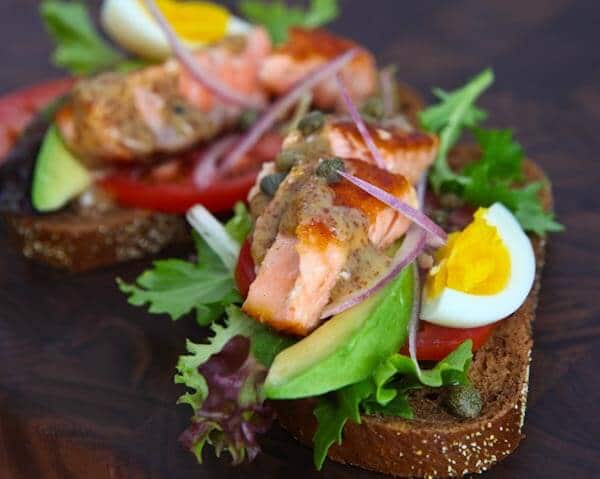
Just because ...

... it's so beautiful.
An open-faced salmon sandwich with mustard and little else.
The work of Marcus Samuelsson via Steamy Kitchen, where all the elements of the dish are spelled out.
Pre-summer is off to a fine start
What a brilliant holiday Monday. The weather was spectacular, and if this is any indication of how the summer’s going to unravel for us, we’ve got happy summer days ahead.
We’ve also got a Sabrosito cooking demonstration coming up very soon. Watch this space for an update or ask me about it when you’re in the shop next.
In the meantime, from Pistachio, here’s this week’s recipe: stewed haddock with tomato and basil.
Steph writes:
I was thinking Mediterranean, and when Laurie recommended haddock, it hit me. I rarely eat haddock, which is criminal, really. It’s so versatile, meaty, delicious and doesn’t have to be handled with kid gloves, which is why I thought of stewing it.
To feed four, you’ll need about 1 ½ pounds of haddock [depending on appetites], a 100-ounce can of good quality whole tomatoes, some fresh basil, a half onion finely diced, one clove of garlic stuck w/a toothpick so that it can be hauled out later and extra virgin olive oil.
In a wide pan about 2” deep, saute the onion and garlic in olive oil over medium heat, until soft. Strain the can of tomatoes, reserving the liquid, and mash the tomatoes with your hands.
Add the tomatoes and liquid to the onions, with a few torn leaves of basil. Season with salt, pepper and maybe a few cracked chilis for some fresh top notes to this dish, or more chilis, if you and your guests like it hot.
Simmer slowly, uncovered; 20 minutes should do it; the stew will be have tightened up but should reduce to a puree. [This can be done ahead of time, even the day before, even in batches for the freezer, so that you can pull out a stew and bring on a meal super fast on a busy weeknight.]
When ready to cook, heat the oven to 400 F. Bring the tomato stew to a boil on top of the stove. Pour the stew into a baking dish. Place the fish [cut into eight equal-sized pieces; they’ll be about three ounces each and cook faster in smaller pieces], add the fish in a single layer, evenly spread out. Dab each piece of fish with a dot of olive oil to make a delicious, moist seal while it cooks, and bake for about 7 to 12 minutes.
What are we drinking with this, Glenn?
I’m thinking Portugal, a vinho verde. The wine is delicate, earthy and has a slightly greenish hue. The grapes are picked young, before a lot of sugar has been allowed to develop, which gives the wine some natural acidity and some mild effervescence, and which is going to make the flavours of this dish shine. Some more detail about our vinho verde here.
Glenn Barley is an agent with Stem Wine Group.
Tuesday, May 4, 2010
This is my favourite place to start with fish
Raw. When the fish is fresh, there's nothing better. And no, you don't need a sashimi knife, but it wouldn't hurt.
And yes, your knife has to be sharp. This is a great blog post for sharpening your knife, but don't feel you have to do it yourself. Nella does a great job here in Toronto. But it helps to know how to keep the edge Nella gives you.
Once that knife edge is ready, think about how you want to go: slivers, so thin you can see the knife blade through the flesh, or straight-ahead slices, like bread, because hey, you just want to get down to eating already.
I'd like to encourage you to try the oblique-style of slicing, the way you might diagonally slice a baguette to give you a four-inch-long slice of bread when the baguette itself is only three inches around. The sliver-slice of fish will be a kind of facoletto, Italian for handkerchief, see-through, delicate and lovely.
Lay the slices loosely, with easy folds along a plate. Season with coarse sea salt and some freshly ground black pepper. In a small bowl on the side, combine one tablespoon of grated ginger, four drops of fish sauce, a splash of rice wine vinegar, a splash of lime juice, a splash of sesame oil, 1/2 a thai chili and one tablespoon of fresh, chopped cilantro.
Just before serving [this is a great starter before a piece of grilled steak, roast chicken, leg of lamb, or even a simple home-style pasta], spoon on the vinaigrette and serve with a salad of frisee, splattered with chopped scallions and dressed with walnut oil and fresh lime.
Which fish? Salmon never disappoints, in my view. Halibut and grouper are great, too.
For wine pairings, I always turn to my favourite wine guy, Glenn Barley, an agent with Stem Wine Group.
Says Glenn: An Ontario white comes to mind for this dish. It's most powerful element is the sesame oil -- nutty, earthy, roasted. Cave Spring's Chenin Blanc 2007 has an oily, flowery richness that brings the sesame oil to mind, but is different enough to make a good complement. This VQA wine also has a slightly herbal aspect, which pairs well with the cilantro's top notes.
And while waiting for the main course to cook, here's a cool interactive fish site. Use your cursor and get in on the action.
And yes, your knife has to be sharp. This is a great blog post for sharpening your knife, but don't feel you have to do it yourself. Nella does a great job here in Toronto. But it helps to know how to keep the edge Nella gives you.
Once that knife edge is ready, think about how you want to go: slivers, so thin you can see the knife blade through the flesh, or straight-ahead slices, like bread, because hey, you just want to get down to eating already.
I'd like to encourage you to try the oblique-style of slicing, the way you might diagonally slice a baguette to give you a four-inch-long slice of bread when the baguette itself is only three inches around. The sliver-slice of fish will be a kind of facoletto, Italian for handkerchief, see-through, delicate and lovely.
Lay the slices loosely, with easy folds along a plate. Season with coarse sea salt and some freshly ground black pepper. In a small bowl on the side, combine one tablespoon of grated ginger, four drops of fish sauce, a splash of rice wine vinegar, a splash of lime juice, a splash of sesame oil, 1/2 a thai chili and one tablespoon of fresh, chopped cilantro.
Just before serving [this is a great starter before a piece of grilled steak, roast chicken, leg of lamb, or even a simple home-style pasta], spoon on the vinaigrette and serve with a salad of frisee, splattered with chopped scallions and dressed with walnut oil and fresh lime.
Which fish? Salmon never disappoints, in my view. Halibut and grouper are great, too.
For wine pairings, I always turn to my favourite wine guy, Glenn Barley, an agent with Stem Wine Group.
Says Glenn: An Ontario white comes to mind for this dish. It's most powerful element is the sesame oil -- nutty, earthy, roasted. Cave Spring's Chenin Blanc 2007 has an oily, flowery richness that brings the sesame oil to mind, but is different enough to make a good complement. This VQA wine also has a slightly herbal aspect, which pairs well with the cilantro's top notes.
And while waiting for the main course to cook, here's a cool interactive fish site. Use your cursor and get in on the action.
Monday, May 3, 2010
By popular demand
I get it again and again. My customers are tired of cooking fish the only way they know how. They'd like to try some new dishes, but don't know where to start. I suggest starting here.
I've asked food writer Stephanie Ortenzi, who used to cook for a living, to come up with a weekly way to do fish differently, or ways to do fish better.
Take it away, Steph.
I've asked food writer Stephanie Ortenzi, who used to cook for a living, to come up with a weekly way to do fish differently, or ways to do fish better.
Take it away, Steph.
Subscribe to:
Posts (Atom)